News
Insights, real-world case studies, and news from the world of manufacturing digitalization.
The 3 Biggest Roadblocks to Digitalization in Slovenian Manufacturing (and How to Overcome Them)
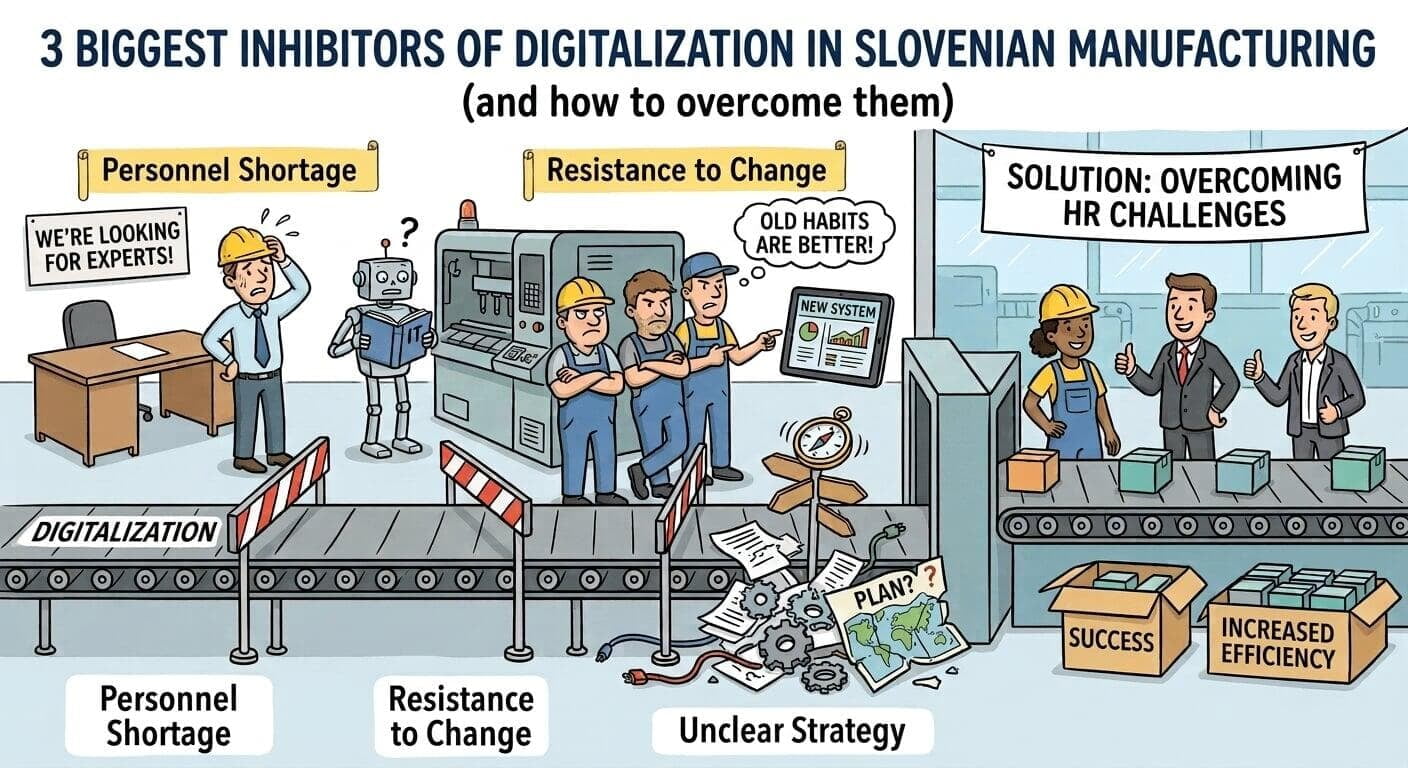
For Slovenian manufacturing to stay in the global game, strong digitalization of systems isn't optional—it's the only way forward. Yet many companies get stuck before they even start. So why do projects stall, despite leadership being fully aware that transformation is urgent? In practice, three key barriers keep popping up:
1. A shortage of the right people and specialized expertise
The biggest hurdle is the talent crunch. Companies need professionals who understand both IT and industrial processes—MES, ERP, and the like. A common mistake is dumping the project on the internal IT department or production managers, who simply don't have the time or the niche skills required for complex integrations. The result? Burnout and delays. The right project lead needs to speak both the language of coders and the language of machine operators.
2. Resistance to change and an inflexible culture
At its core, digitalization is a cultural shift. Production floor operators often see new systems as surveillance and extra red tape. If implementation isn't paired with transparent communication and hands-on change management, projects quickly hit a wall of silent sabotage.
3. Unclear strategy and fragmented processes
Deploying technology without thinking things through first creates disconnected "digital islands" and broken data flows. Before picking any software, you need a professional audit and process optimization. The information system must serve the company's business model—never the other way around.
How to break the bottleneck? Three possible approaches
When companies realize they lack the right person to lead the project, they're usually faced with three options. To make the choice easier, we've rated each one based on speed, quality, and cost of implementation.
Hiring a new in-house project lead
Speed (Low): Finding and onboarding specialized talent takes months in today's job market.
Quality (High): An in-house expert can fully focus on the company's specific needs.
Cost (High): Expensive hire. The biggest catch? What do you do with that pricey expert once the rollout is complete?
Piling extra tasks onto the existing team
Speed (Very low): Day-to-day operations take priority, so the project crawls at a snail's pace.
Quality (Low to Medium): Lack of time and know-how for complex integrations leads to cut corners and compromises.
Cost (Medium to High): Hidden costs from lost productivity, team burnout, and subpar solutions quickly add up.
- Bringing in an external partner
Speed (High): Immediate kick-off with specialized methodology, no drain on your internal team.
Quality (High): The partner brings a broad range of experience, anticipates pitfalls, and objectively manages resistance to change.
Cost (Optimized): Expenses are clearly confined to the project timeline, with no long-term staffing overhead.
Sources
- Finance (2026, June 3). What's holding back digitalization in Slovenian companies.https://www.finance.si/ikt/kaj-zavira-digitalizacijo-slovenskih-podjetij/a/9012207
- Metina lista (2026, June 3). Are IT professionals the ones blocking digital transformation? https://metinalista.si/ali-so-informatiki-zaviralci-digitalne-preobrazbe-podjetij/
- Mikrocop (2026, June 3). Digital transformation is the long-term goal—digitalization is the path to it. https://www.mikrocop.si/blog/digitalna-preobrazba-je-dolgorocni-cilj-do-katerega-pelje-digitalizacija
- HR&M Magazine (2026, June 3). Digitalization: Why technology without competence doesn't deliver results. https://www.hrm-revija.si/digitalizacija-zakaj-tehnologija-brez-kompetenc-ne-prinasa-rezultatov

